Real Italian vs Italian Sounding: What Really Makes the Difference (and Why AJO Does It the Hard Way)
Outside of Italy — and Vietnam is no exception — words like pizza, pasta, carbonara
and espresso are everywhere. An Italian flag on a sign and an Italian-sounding name can be enough
to claim “authentic.”
But between Real Italian and Italian Sounding there is a huge gap:
ingredients, technique, culture, and honesty.
Real Italian vs Italian Sounding — how to recognise authenticity in Da Nang.
About AJO
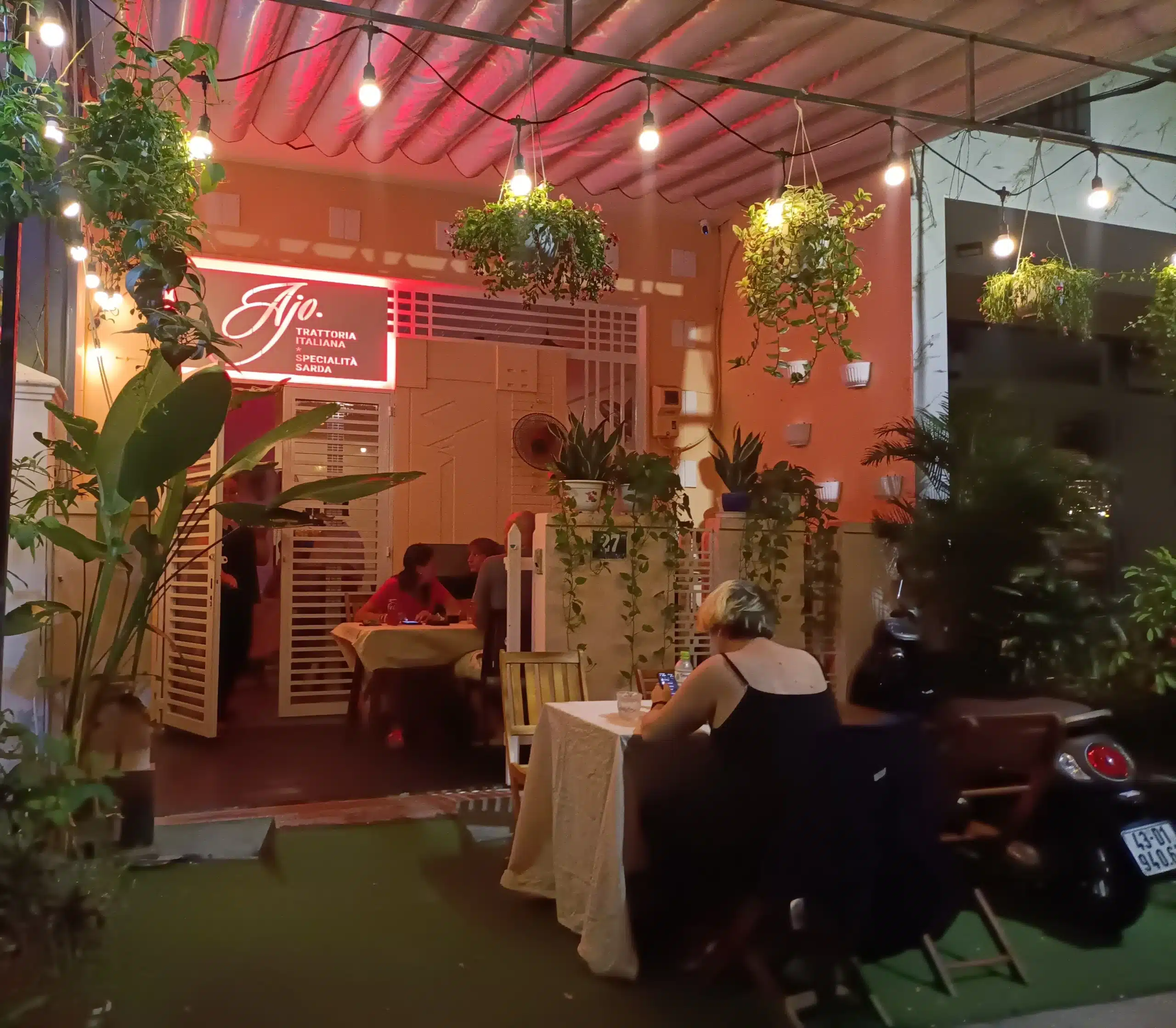
AJO – Italian Trattoria Sardinian Specialties is a small 18-seat trattoria in An Thuong, Da Nang,
focused on real Italian and Sardinian flavours, handmade pasta, and warm, family-style hospitality.
Our goal is simple: bring a truthful slice of Sardinia and Italy to Da Nang — not a costume version of it.
What Is “Italian Sounding” (and Why It’s Everywhere)
Italian Sounding refers to products and restaurants that look or sound Italian
but are not truly Italian in origin, ingredients, or technique.
You’ll often see Italian names, tricolour colours and iconic imagery used to create a sense of authenticity
— even when the food has little real connection to Italy.
If you’ve ever wondered why some places feel “Italian” but don’t taste like Italy, the key is often the difference between
authentic cooking and what’s commonly called
Italian sounding —
Italian names and flags used for marketing, without the same ingredients, techniques, or standards behind them.
A simple way to check authenticity is to look for protected products and traditional references (PDO/PGI/TSG), which are part of the official
EU quality schemes.
It’s not the only indicator, but it’s a strong signal for ingredients like cheese, cured meats, and olive oil.
Common examples around the world include:
“Parmesan” instead of Parmigiano Reggiano.
“Carbonara” made with cream, mushrooms, or chicken.
Generic “Italian-style” cheeses and sauces replacing regional originals.
Endless menus labelled Italian with random, non-Italian combinations.
The goal is simple: benefit from the global reputation of Italian cuisine without investing
in the craftsmanship behind it.
What “Real Italian” Means for AJO in Da Nang
For us, Real Italian is not a marketing phrase. It’s a daily commitment.
We’re a small trattoria with a strong Sardinian soul — which means we prefer fewer dishes, done properly,
over a long list of “Italian-ish” options.
Ingredients
Carefully selected, with Italian & Sardinian essentials
Not everything needs to be imported, but some ingredients cannot be replaced without changing
a dish’s identity. We use key Italian and Sardinian products when they truly matter for flavour and tradition,
and we carefully select local ingredients that respect the recipe’s logic.
Handmade pasta
Sardinian pasta made in-house
Traditional Sardinian shapes like culurgiones, malloreddus and fregula
are at the heart of our kitchen. Handmade, honest, and served the way they should be —
with balanced sauces and real technique.
Technique
Respect for real recipes
Pasta is served al dente. Sauces are built for balance.
We avoid shortcuts that turn a traditional dish into something else just because it sells easily.
Culture
A story you can taste
AJO is not an invented brand. Our menu reflects a real Sardinian and Italian background.
The goal is to bring a truthful slice of Italy to Da Nang — not just a themed experience.
Real Italian vs Italian Sounding: The Key Differences in Practice
1. Origin & transparency
Italian Sounding: origin is often vague or hidden behind imagery, with Italian names and flags doing the “trust” job instead of real traceability.
At AJO: we’re happy to explain where key ingredients come from and why we use them, especially when a Sardinian dish needs specific products to stay authentic.
2. Ingredient logic
Italian Sounding: the recipe is rebuilt around cheap or widely available substitutes. The dish keeps an Italian name but loses its soul — for example, replacing regional cheeses with generic melted blends or using “Italian-style” sauces that flatten the flavour.
At AJO: we respect the internal logic of the dish. If a recipe is born with a specific cheese, cured meat, or technique, we protect that identity instead of “approximating” it with convenient swaps.
3. Taste & balance
Italian Sounding: flavours are often loud and heavy — extra cream, too much sugar or salt, thick sauces designed to overwhelm rather than express ingredients.
At AJO: we aim for clean, readable flavour. You should be able to taste the grain, tomato, herbs and cheese clearly, with balanced seasoning and a lighter, more elegant finish.
4. Menu identity
Italian Sounding: very long menus with inconsistent “everything-Italian” choices. The result feels like a theme rather than a real culinary identity.
At AJO: a focused menu rooted in Sardinian and Italian tradition. Fewer dishes, more craft — made for a small trattoria experience, not a mass-market formula.
5. Experience & hospitality
Italian Sounding: an Italian costume — décor and names without the warmth, rhythm and human touch that define a real trattoria.
At AJO: intimate, personal hospitality in an 18-seat space where the goal is simple: guests arrive as customers and leave as friends, with a real Sardinian home-style feeling.
6. After-meal feeling & digestion
Italian Sounding: heavy sauces, generic cheeses, excess sugar or cream can leave you feeling overly full, tired, or “weighed down,” even if the dish looks impressive.
At AJO: balanced recipes, real technique and cleaner ingredients usually mean a lighter, more satisfying finish — you leave happy and comfortable, not exhausted by the plate.
Curious about the real flavours behind these differences?
Explore our
Menu
and discover the story behind AJO in
Our Story.
(Update these slugs if yours are different.)
A Healthy Italian Culture in Da Nang
Da Nang is building an interesting Italian food scene. A few places are showing real respect for Italian technique
and tradition, helping guests understand what authenticity tastes like outside Italy.
We respect this shared commitment to real cooking culture. At AJO, we contribute with a strong
Sardinian identity — handmade culurgiones, malloreddus and fregula, honest ingredients,
and a warm 18-seat trattoria experience in An Thuong.
How to Spot a Real Italian Restaurant in Da Nang
Whether you’re exploring Da Nang’s food scene or travelling abroad, here’s a quick checklist
to help you recognise the difference between true Italian authenticity and Italian sounding.
Menu coherence:
A real Italian restaurant usually has a focused, well-structured menu. You’ll notice correct dish names,
logical combinations, and a consistent identity (regional or classic). Be cautious of extremely long menus
trying to cover everything from Northern to Southern Italy plus random international dishes.
Pasta technique:
This is one of the biggest signals. Traditional Italian pasta is served al dente,
with sauces designed to enhance — not drown — the flavour. If pasta is consistently overcooked,
or sauces feel heavy and generic, you may be closer to an “Italian-style” interpretation.
Ingredient knowledge:
Staff in an authentic place can usually explain key ingredients confidently:
olive oils, cheeses, cured meats, flour types, and why certain elements are essential to the recipe.
Authenticity isn’t just about importing everything — it’s about understanding what truly matters for each dish.
Respect for classics:
This doesn’t mean the menu must be traditional-only. But classic dishes should be recognisable and correct
in their core structure. A good example is carbonara: when it becomes a creamy, reconstructed dish,
the name remains Italian but the identity is no longer the same.
A real story:
The strongest Italian restaurants usually have a genuine culinary background behind them:
a family tradition, a regional identity, or a clear philosophy. When the story feels vague
and depends mostly on decor or flags, authenticity might be more aesthetic than real.
Sardinian cuisine is one of Italy’s most distinctive regional traditions,
with unique pasta shapes and ingredients rarely found outside the island —
which is why we’re proud to keep that identity alive here in Da Nang.
Taste the Real Difference at AJO
If you’re in Da Nang and want to experience real Italian and Sardinian cuisine in a small,
warm, 18-seat trattoria, we’d love to host you.
AJO – Italian Trattoria Sardinian Specialties
27 An Thuong 5, Da Nang